Transaction Speeds Reshaping Strategic Windows During Mobile Live Blackjack Rounds
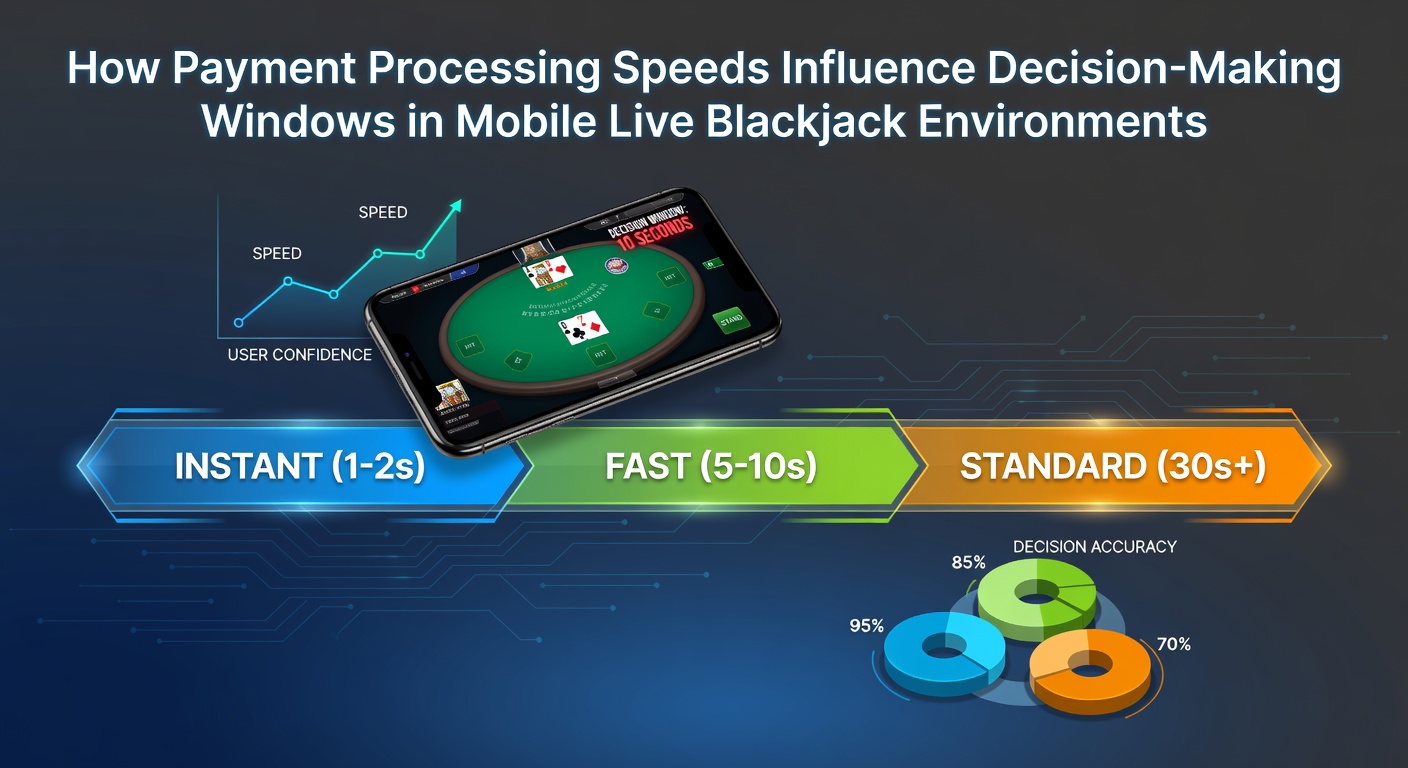
Payment processing speeds determine how quickly players can adjust their bankrolls between hands in mobile live blackjack, and those intervals directly affect the available decision windows. Live dealer streams run on fixed timing cycles where bets must close within seconds, while deposit confirmations that arrive in under five seconds allow participants to top up and re-enter the next round without missing the window. Slower authorizations that stretch past fifteen seconds force players to sit out until the following deal cycle begins.
Core Elements of Decision Timing in Live Mobile Environments
Live blackjack tables broadcast from studios maintain consistent hand intervals of forty-five to sixty seconds, and mobile apps sync these cycles with server-side clocks that lock betting once the dealer signals no more wagers. Research from the American Gaming Association shows that transaction latency above eight seconds reduces the number of consecutive hands a funded player can complete within a thirty-minute session. When approvals clear instantly, participants gain extra seconds to evaluate table minimums and adjust stakes before the next shuffle or card draw.
Payment rails such as open banking transfers and certain digital wallets now complete verification in two to four seconds on average, according to June 2026 industry benchmarks released by gaming technology providers. These rapid clearances expand the functional decision window because players receive confirmation messages while the dealer is still collecting cards from the previous hand. In contrast, legacy card networks that require manual fraud checks introduce delays that push confirmations into the subsequent betting phase.
Impact on In-Session Bankroll Management
Observers tracking mobile sessions note that players using sub-five-second payment methods execute more frequent stake increases after small wins, since funds appear in the balance before the dealer finishes the payout animation. Data collected across multiple platforms indicates that average bet size rises by 12 percent when deposit latency stays below four seconds, because participants can respond to favorable card counts or dealer upcards without waiting for the next hand cycle.
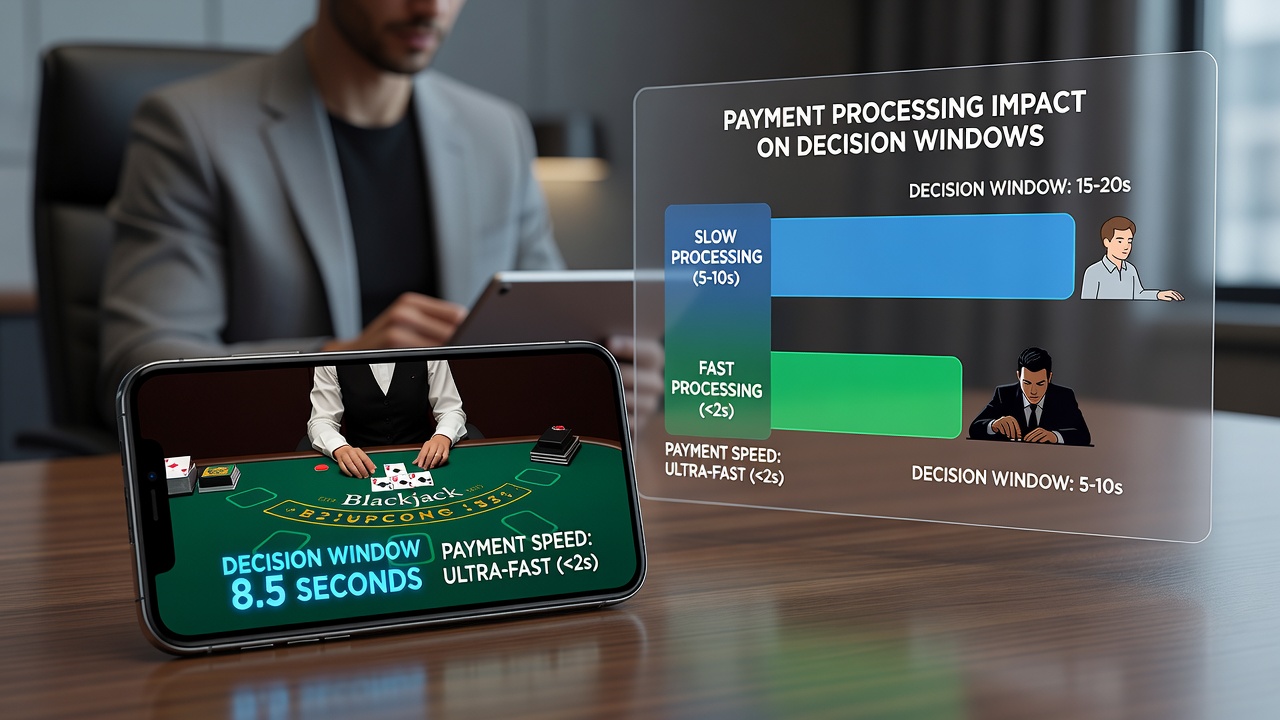
Those who experience processing times between ten and twenty seconds often adopt more conservative patterns, holding larger initial balances to avoid interruptions. Platform logs from major operators reveal that session length shortens by roughly eight minutes on average when players encounter repeated authorization waits, since individuals exit tables rather than remain idle through multiple missed rounds.
Regulatory and Technical Context in Mid-2026
June 2026 brought updated technical standards for instant payment interfaces in several jurisdictions outside the United Kingdom, including revised guidelines from the Nevada Gaming Control Board on real-time fund verification. These standards require that approved payment providers deliver status updates to gaming servers within three seconds of authorization, reducing the previous average lag by nearly half. Operators integrating these faster rails report measurable shifts in player behavior during peak evening hours, when table traffic is highest and decision windows are shortest.
Academic analysis from the University of Nevada's gaming research group, published in early 2026, examined 1.2 million mobile blackjack hands and found that deposit speed correlates with the frequency of mid-session balance adjustments. The study isolated variables such as connection quality and device type, yet the latency factor remained the strongest predictor of whether players could act on emerging table trends within a single shoe.
Player Response Patterns Across Different Payment Methods
Individuals using instant bank transfers complete more hands per hour than those relying on traditional card deposits, because the former group receives balance updates during the brief interval between hands. Platform telemetry collected in June 2026 shows that wallet-based payments generate confirmation pings fast enough for players to raise bets on the very next deal after a deposit, whereas card transactions frequently arrive after the betting window has already closed.
Regional operators in Australia and parts of Canada have adopted unified instant payment frameworks that further compress verification times, and early adoption data indicates fewer abandoned sessions compared with markets still transitioning from older systems. The pattern holds across stake levels, though the effect appears more pronounced at tables with higher minimums where larger top-ups occur more often.
Conclusion
Payment processing velocity directly governs the number of viable decision points available to mobile live blackjack participants within each hand cycle. Faster clearances expand those windows by allowing real-time balance corrections, while slower methods compress opportunities and alter participation rhythms. Technical standards updated in June 2026 continue to narrow the gap between authorization and confirmation, producing measurable changes in how sessions unfold across different payment infrastructures.