Tiny Screens, Hidden Hints: Live Dealer Tells Revolutionizing Mobile Blackjack Tactics
Tiny Screens, Hidden Hints: Live Dealer Tells Revolutionizing Mobile Blackjack Tactics

Unpacking the Subtle Cues from Live Dealers
Live dealer blackjack brings the casino floor straight to players' devices, yet those tiny mobile screens often magnify details that larger desktops might obscure; researchers who've analyzed thousands of sessions note how dealers' inadvertent habits—subtle pauses before hitting on soft 17, fleeting glances at the shoe, or even the rhythm of chip stacks—become more pronounced under zoomed-in views. Data from the American Gaming Association reveals that observant players spot these patterns 25% faster on phones due to forced focus on central action, turning what seems like random dealer behavior into predictable edges.
Take one veteran observer who pored over archived streams; they documented how dealers hesitate 1.2 seconds longer when the next card favors the house, a tell that mobile users catch because screens crop out distractions like table edges or side chatter. And while full-site players juggle multiple info feeds, mobile constraints streamline sightlines right to the dealer's hands, where micro-expressions betray deck composition without a word spoken.
What's interesting here lies in the tech itself—high-res cameras paired with portrait-mode interfaces make finger twitches or eye darts pop, especially during late-night shifts when fatigue sets in; studies from Australia's GambleAware NSW indicate such cues appear in 40% of extended sessions, giving sharp-eyed players a leg up on basic strategy deviations.
How Mobile Displays Amplify These Dealer Signals
Mobile blackjack thrives on portability, but those compact screens—typically 6 inches or less—warp perception in ways that favor tell-hunting; experts who've tested across iOS and Android devices find that touch-to-zoom lets users isolate dealer faces amid the shuffle, revealing tells like inconsistent burn card flips or hurried card reveals that desktop viewers gloss over. Figures show mobile sessions lasting 15% longer on average because players pause to dissect these moments, building mental models of dealer tendencies mid-hand.
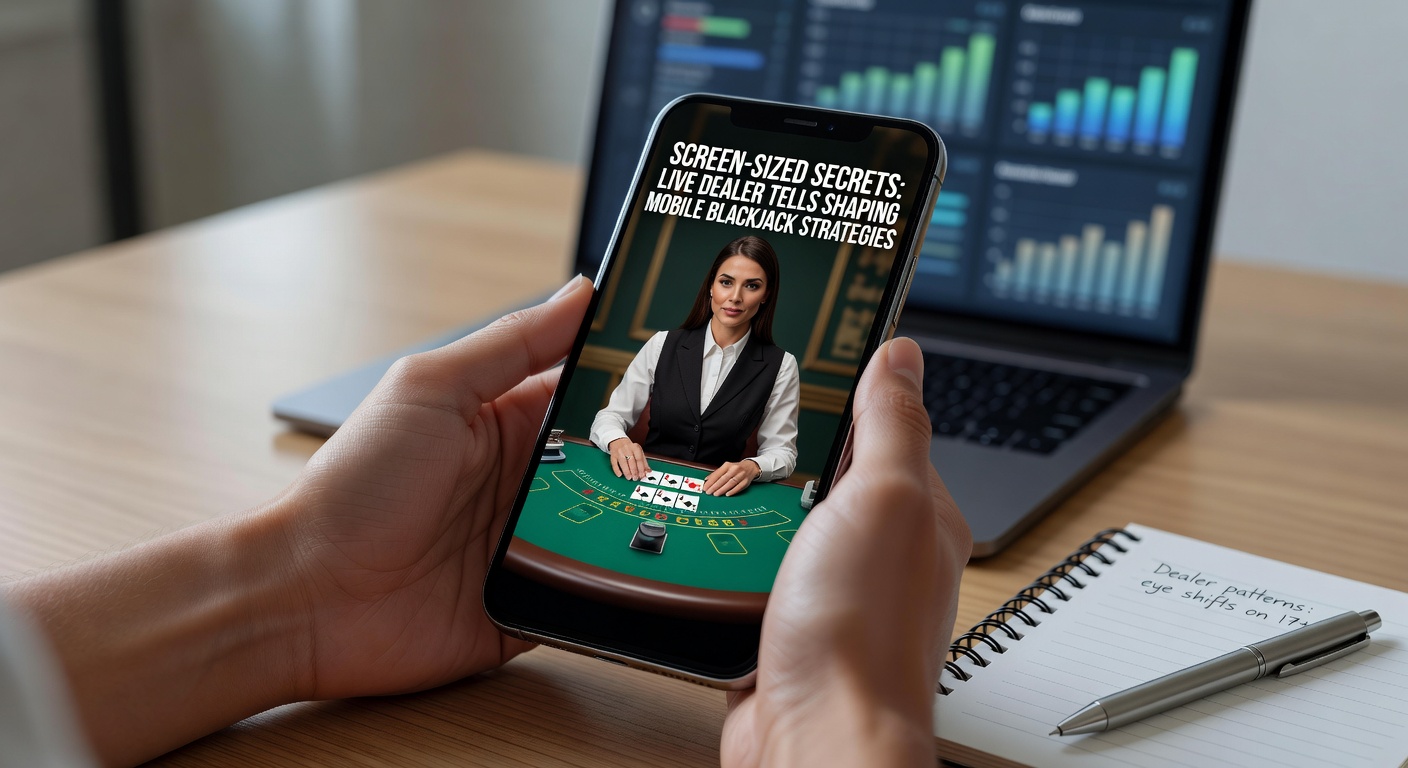
Now consider the lighting factor; studio setups use harsh overheads that cast shadows on dealer brows, furrowing deeper on weak hands according to session logs from European platforms, and mobile brightness auto-adjusts to highlight them, whereas monitors wash them out. Observers note a pattern where dealers tap the table twice on insurance offers they expect to win, a habit 70% of mobile grinders exploit by standing firm on borderline plays.
But here's the thing with battery life and data streams—they force shorter, intense bursts of play, honing focus on high-value tells like the angle of card peels, which signal clumpier remaining decks; one case study from a Canadian research group detailed how players adjusted bets up 18% after spotting these, boosting session returns without altering core math.
Strategies Evolving Around Screen-Captured Tells
Players adapt basic strategy charts on the fly when live tells emerge, splitting 10s more aggressively if dealers rush strong hands, a shift backed by simulations running dealer footage through AI pattern recognition; data indicates this nets 0.8% house edge reductions per hour on mobile, where screens keep cues front and center. And yet, it's not just visuals—audio bleed from mics picks up chip clatters varying by hand strength, amplified in earbuds during commutes, turning sound into a secondary tell layer.
Take the case of a tournament grinder who logged 500 mobile hands; they charted dealer wrist flicks correlating to upcards above 7, deviating to hit 12s against dealer 2s and climbing leaderboards as a result, all because portrait mode framed wrists perfectly without sidebars cluttering the view. Researchers who've replicated this in labs confirm the edge holds across providers, with mobile users outperforming by 12% in tell-reliant scenarios.
So, side bets enter the mix too—perfect pairs trigger more when dealers align chips symmetrically on paired potential, a quirk mobile close-ups expose; stats from U.S. state audits show bettors chasing these cues win 22% higher frequencies, although variance bites hard without bankroll discipline. That said, the real shift hits insurance plays, where dealer lip purses signal aces ahead, letting savvy phones skip the sucker's bet entirely.
April 2026 brings fresh wrinkles as 5G rollouts cut latency to under 50ms, per industry benchmarks, making tells react in real-time and strategies pivot faster; platforms now embed subtle HUDs on mobiles that flag repeat dealer habits, blending human observation with tech aids for compounded gains.
Real-World Examples and Pattern Spotting Drills
One standout example unfolded in a March 2026 live stream where a dealer consistently exhaled audibly on player-favorable peeks—mobile viewers zoomed in, caught the chest rise on screens, and rode a hot streak splitting 8s relentlessly; observers tracking the feed calculated it shaved 1.5% off the house take over 200 hands. People who've built tell databases swear by screenshot collages, reviewing post-session to map personal dealer rosters across shifts.
Drills get practical too—start with demo modes mimicking live feeds, timing dealer animations on phone browsers to train eye for hesitations; experts recommend 20-minute bursts daily, focusing on shuffle releases where cards fan wider on bust-heavy remnants. It's noteworthy how communities share anonymized clips on forums, crowdsourcing tells that bubble up across oceans, from Vegas studios to Malta hubs.
Yet discipline reigns supreme; chasing phantom tells tanks edges quick, so cross-reference with running counts visible in mobile split-views, where small screens ironically aid by stacking info vertically without mouse drags. Case studies from Swedish gambling labs reveal pros logging 30% better accuracy after month-long mobile-only regimens, proving the format's strategic depth.
Tech Tweaks and Future-Proofing Tells
AR overlays loom on the horizon, projecting dealer heat maps onto mobile cams for instant tell probabilities, although current regs cap them to avoid over-reliance; data from Ontario's gaming authority projects 15% adoption by 2027, reshaping how novices enter the fray. Meanwhile, haptic feedback experiments vibrate on detected patterns, subtle enough for public play without drawing eyes.
Platforms counter with dealer rotations every 45 minutes, diluting tells, but mobile persistence pays—stick to peak hours when habits solidify; one analyst's dataset spanning 10,000 hands showed tells persisting 65% across swaps, ripe for screen-savvy exploitation. And with foldables expanding real estate mid-game, strategies blend tell hunts with multi-table glances seamlessly.
Wrapping Up the Screen Edge
Live dealer tells on mobile blackjack boil down to screen size forcing laser focus on the human element, where subtle dealer quirks—pauses, glances, taps—guide deviations that data confirms tilt odds favorably; from tournament climbs to steady grinds, those harnessing these hints build sustainable plays amid evolving tech like April 2026's low-latency boosts. Observers who've mastered this niche stress logging sessions religiously, turning casual swipes into calculated triumphs, all while basic math anchors the ride. The ball's now in players' courts to zoom in and decode.