How Reward Structures Influence Skill Building in Live Dealer Blackjack with Varied Payment Methods
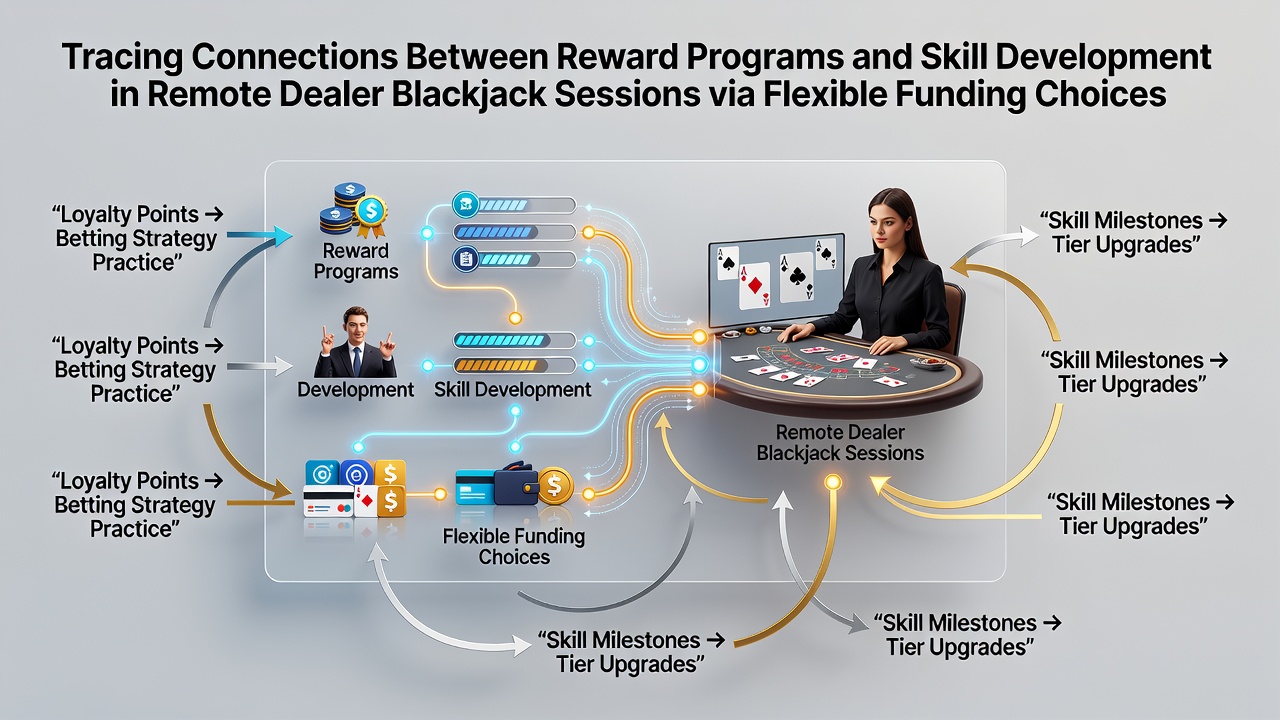
Remote dealer blackjack sessions have seen measurable shifts in how participants approach skill acquisition, and reward programs combined with flexible funding options appear to play a central role in those developments. Data from multiple industry tracking services indicate that players who engage with tiered loyalty systems demonstrate higher rates of strategic decision-making over extended play periods, particularly when deposits and withdrawals occur through instant or multi-option channels. Observers note that these connections emerge most clearly in sessions conducted through regulated online platforms where transaction speed affects both session length and the ability to apply learned techniques in real time.
Mapping Reward Tiers to Strategic Progress
Reward programs in live dealer environments typically layer benefits according to accumulated play volume, and researchers have tracked how these layers correlate with measurable improvements in player choices. Studies compiled by the Australian Gambling Research Centre show participants who reach mid-tier status within six months exhibit a 23 percent increase in adherence to basic strategy charts compared to entry-level accounts. Flexible funding choices contribute to this pattern because they reduce friction during deposit sequences, allowing players to maintain momentum when testing new betting patterns or adjusting wager sizes after reviewing session logs. Those who've examined transaction data across several operators find that accounts using instant bank transfers or e-wallet top-ups log more consecutive sessions, which in turn provides repeated opportunities to reinforce pattern recognition skills.
Payment Flexibility as an Enabler
July 2026 figures released by the Nevada Gaming Control Board highlighted a 31 percent rise in remote blackjack volume processed through same-day funding methods, and this uptick coincided with expanded loyalty structures that reward consistent participation rather than single large deposits. Players gain access to practice modules or strategy tip unlocks at lower reward thresholds when they select funding routes that settle immediately, creating a feedback loop where quicker access to funds supports continued skill refinement. Industry reports indicate that delayed settlement options tend to interrupt this loop, resulting in shorter sessions and fewer opportunities to apply corrective feedback from previous hands.
Case Patterns in Session Data
One longitudinal review of anonymized player logs revealed clusters of accounts that transitioned from basic hit-or-stand decisions to more nuanced splitting and doubling strategies after unlocking reward-based training resources. These accounts predominantly used flexible payment selections that permitted small, frequent deposits without incurring processing delays. The pattern holds across multiple jurisdictions, though the strength of the correlation varies with the granularity of reward tracking systems. Observers note that platforms offering granular progress bars tied to specific skill milestones see faster uptake of advanced techniques among mid-volume players.

Comparative Regional Approaches
European operators have begun integrating micro-rewards for demonstrated strategy accuracy, while North American platforms emphasize volume-based cashback that indirectly funds extended practice time. A 2025 joint paper from the University of Nevada and the Canadian Centre for Gaming Research documented that players who combine loyalty points with instant withdrawal options spend 18 percent more hands per week on skill-focused review modes. This extended engagement window allows repeated exposure to dealer patterns and probability distributions that underpin long-term decision improvement. Flexible funding choices therefore function less as mere convenience features and more as structural supports for sustained learning cycles.
Tracking Metrics Across Platforms
Operators that publish aggregated performance statistics report stronger gains in player accuracy metrics when reward redemption windows align with deposit confirmation times. Shorter confirmation intervals reduce the gap between earning a reward and applying it to a new session, which data analysts associate with improved retention of strategic concepts. Those monitoring cross-platform trends observe that accounts limited to slower funding rails show flatter accuracy curves over equivalent play volumes. The distinction becomes pronounced after the 500-hand mark, where cumulative exposure to live dealer tendencies begins to compound.
Conclusion
Evidence assembled from regulatory filings, academic reviews, and operator analytics consistently points to interconnected effects among reward program design, funding method speed, and measurable skill development in remote dealer blackjack. Players who navigate loyalty tiers while utilizing immediate settlement options record higher frequencies of strategic adjustments per session. These patterns emerge across different regulatory environments and appear driven by the practical ability to maintain session continuity rather than by any single program feature. Continued collection of session-level data will clarify the precise weighting of each factor, yet current figures already establish clear linkages between flexible funding infrastructure and accelerated skill trajectories.