Deposit Mechanics Shaping Live Dealer Strategies in Mobile Blackjack Tournaments

Players navigating portable tournament formats often face layered decisions that begin well before cards hit the table, and deposit mechanics form one of those foundational layers that influence timing, bankroll allocation, and risk thresholds throughout an event. Data compiled by the New Jersey Division of Gaming Enforcement through June 2026 shows mobile deposits in regulated markets rising 18 percent year over year, with instant methods accounting for nearly two-thirds of all tournament entries. Those figures reveal how payment speed and fee structures directly affect when participants can join rounds and how they adjust their decision trees once seated at live dealer tables.
Payment Speed and Entry Timing
Instant deposit rails such as digital wallets and linked bank transfers allow entrants to move from funding to active play in under thirty seconds, whereas card-based options frequently introduce brief processing windows that shift optimal entry points within multi-round brackets. Researchers at the University of Nevada, Las Vegas Center for Gaming Research documented that players using sub-sixty-second funding completed an average of 1.4 more preliminary rounds per session than those relying on slower rails, because earlier seating permitted fuller observation of dealer tendencies before blinds escalated. Observers note that this timing advantage compounds in portable formats where connection stability and battery life add external variables to already complex choice matrices.
Fee Structures and Bankroll Allocation
Transaction fees ranging from zero to three percent alter the effective stack size available for rebuy decisions and side bets, prompting participants to map different risk curves depending on the chosen rail. In formats that cap rebuys at three per player, a one-point-five percent fee on a mid-stakes entry can reduce the cushion available for the final table by enough margin to change aggression thresholds during heads-up phases. Figures released by the European Gaming and Betting Association in early 2026 indicated that mobile tournament participants who pre-calculated net deposit costs maintained longer average survival times than those who treated fees as afterthoughts, suggesting the decision tree expands backward from the felt to the funding screen.
Bonus Integration and Strategic Layering
Deposit-matched promotions tied to specific payment providers introduce additional nodes into the decision tree because playthrough requirements may overlap with tournament structures that award points for volume rather than pure profit. Participants who select rails carrying bonus credit often face restrictions on withdrawing winnings until wagering thresholds clear, which influences whether they pursue early double-ups or adopt survival-oriented lines. Those who've studied this know that portable devices compound the issue through smaller screen real estate that can obscure simultaneous tracking of bonus meters and live dealer shoe composition, leading some to develop simplified heuristics that prioritize one variable over the other.
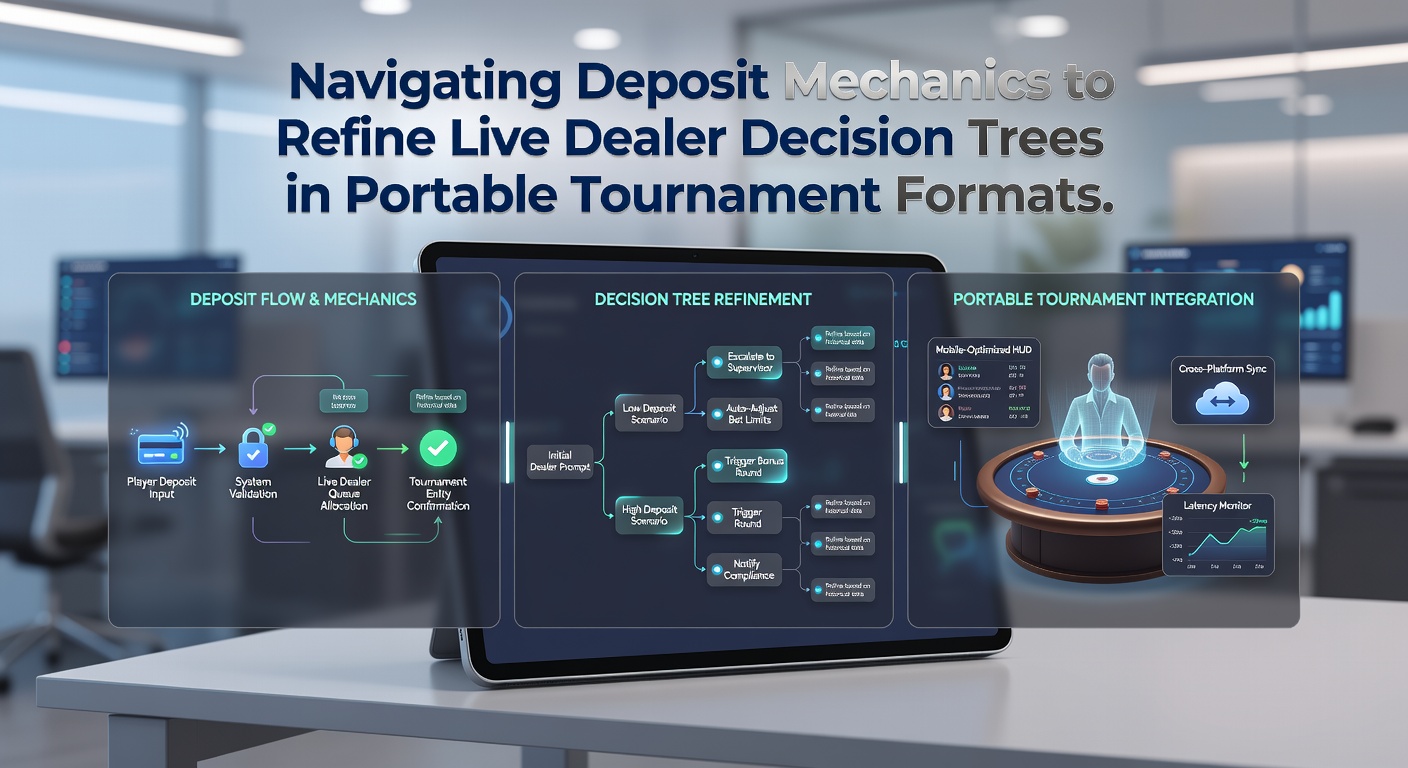
Security protocols attached to certain deposit methods also shape real-time choices once play begins. Two-factor authentication delays that trigger mid-round can force players to pause aggressive lines or miss betting windows, while biometric options reduce that friction yet require prior device enrollment. Industry reports from the Canadian Gaming Association highlight that platforms offering seamless biometric confirmation saw a measurable uptick in late-position raises among mobile users, because the absence of extra verification steps preserved decision-making bandwidth for reading opponent patterns broadcast from the live dealer studio.
Cross-Border and Regulatory Variations
Regional differences in approved payment rails add another dimension for participants traveling or using virtual private networks. A deposit method cleared in one jurisdiction may route through slower verification in another, altering the practical window for late registration in multi-site portable events. Data gathered across multiple markets shows that players who maintain redundant funding profiles across two or three approved rails experience fewer interruptions when primary options encounter temporary holds, allowing decision trees to remain focused on table dynamics rather than funding contingencies.
Conclusion
Deposit mechanics therefore function as an upstream variable that propagates through every subsequent choice in portable live dealer tournaments. Participants who map fee impacts, timing windows, and verification requirements into their pre-event planning create more robust decision trees once cards enter play, because fewer external frictions compete for attention during critical betting rounds. As mobile formats continue expanding through June 2026, the interconnection between funding infrastructure and in-game strategy appears likely to grow tighter rather than loosen.